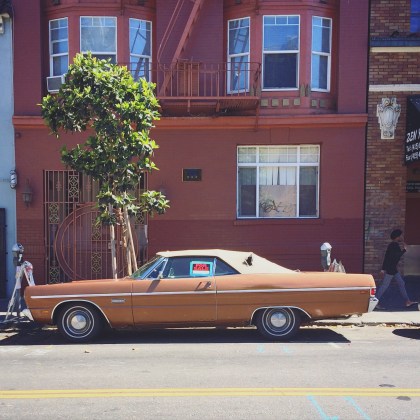
 Despite efforts to be a constant trendsetter, Plymouth proved itself to be an also-ran brand in the 1960’s. Always in the shadows of market competitors Chevrolet and Ford, Plymouth also had to fend for territory from not too costly sibling brand Dodge. Seemingly, whatever Plymouth had, Dodge wanted too. Without the customer base of Chevrolet, or the marketplace freedom of Ford, Plymouth was oft-left to itself to provide a narrow bandwith of consumer desires.
While this benefitted the skinflint image of the price-leading Valiant, it didn’t exactly do wonders for fancier wares that carried the Plymouth prestige parade. The Fury nameplate started out in the same league as the Chevrolet Impala in prestige in 1956. A Jupiter Return later, it was more or less a bargain stage brand, in 1, 2 and 3 strengths (each a little less despair provoking than the last). How does that translate to sales when this formula encapsulates a full sized convertible?
Continue reading “(Found In) Polk Gulch (San Francisco, California): 1969 Plymouth Fury III Convertible”
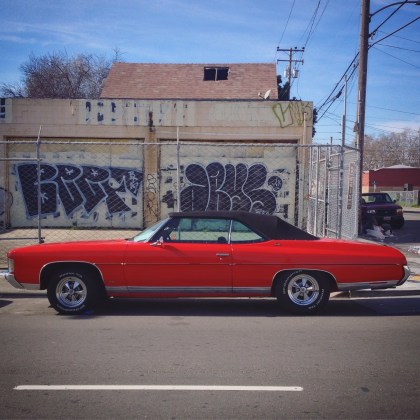 The sporting pretense of the Full Sized Chevrolet had been on the wane for more than half a decade. Nevertheless, with market dominance unlike any other manufacturer, General Motors still saw it worthy to offer top down motoring to the masses in massive sizes when it re-designed its Full Sized Automobiles for the 1971 model year.
 Rockets start to fall back to the earth after they pierce their way into outer space. That’s pretty much the legacy of Oldsmobile during the second half of the 50’s. As the Overhead Valve V8 performance revolution Oldsmobile inspired in 1949 spread to all popular priced cars in the middle of the decade, the laurel brand of Lansing found itself in a dilemma.
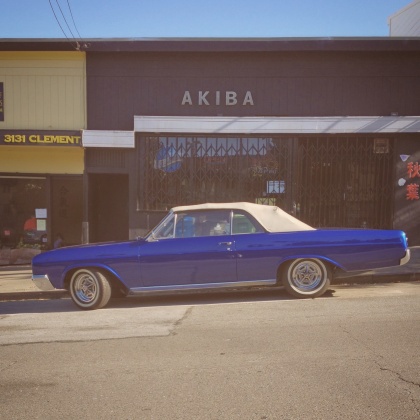 As we head into Convertible season, we look back 50+ years to the peak of the Convertible Market. All American brands minus soon to exit the sales field Studebaker offered convertibles. From petite to ponderous, the choices abounded for budgets stuck in the basement all the way to Bergdorfs.
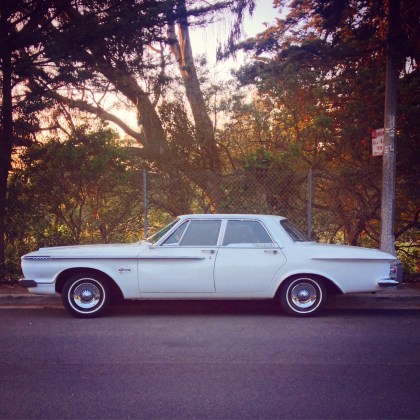 You shouldn’t believe everything you hear over dinner party chatter. Especially when you’re already on the ropes with your business. Chrysler Corporation seemed perpetually going just askew of where buyers wanted for a good portion of the Post-war era.
 As the 2nd half of the 1960’s got underway, Cadillac found itself not doing much wrong. The most premium General Motors offering had long banished American luxury rivals to the lower rungs of the sales charts, if not into the grave. However, this swagger combined with swelling size would eventually be the sword The Standard of The World would nearly mortally wound itself on.
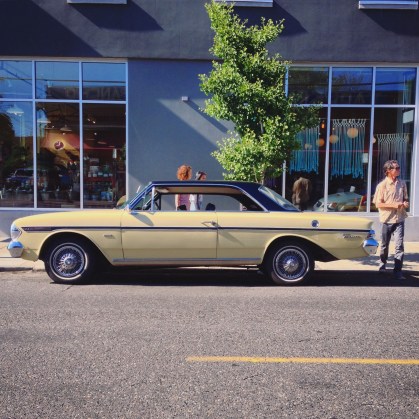 The concept of the “Spring Special” to spur sagging interest in new cars is somewhat a lost concept. In these days of blurred time boundaries, new models up for sale are just given the next model year title. In the past however, new features and running model updates more often than not got a fresh round of marketing to spur along sales of current models.
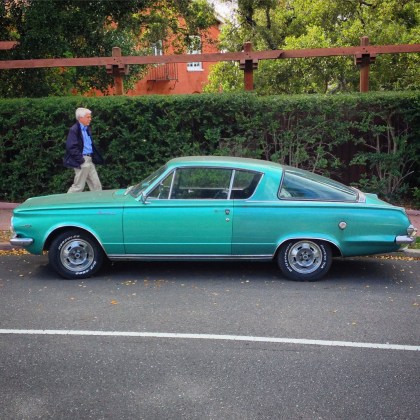 Although it took the Aries initiative to market first, the Plymouth Barracuda didn’t exact run away with the fame or fortune of its most direct rival, the Ford Mustang. Innovative in its own ways, the Barracuda struck a bit of cult following above and beyond rampant Mustang mania.
 The superstitions around “Mercury Retrograde” are perceived as explanations for communication and travel gone awry. Maybe that was the first mistake Ford made; naming their middle brand Mercury in the first place. For every two steps forward the brand made, it seemingly made two steps back.
 Dynamic Drive