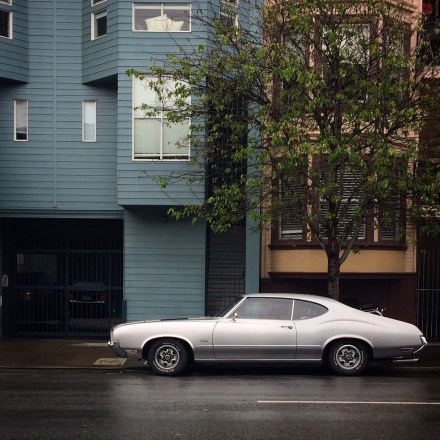
 As Oldsmobile rose to their zenith in the 1970’s, it started to do so by playing musicial chairs with the various marketing images that made for being the toast of the town image that it had fostered since the 1950’s. The Olds-multiplicity of the brand had been a constant mix of practicality, performance and posh since the end of World War II. For the Elegant Ninety Eights there were the Superlative Super 88’s. For the practical F-85 there was the swashbuckling Cutlass. For the sword of intermediates, a crowned princess Supreme started an ascent to the top of the charts like Diana, Mary and Florence starting in 1966.
The “Little Limousine” sparkled the most when it focused on a formal roof’d coupe. Where did that leave it’s athletic, buxom and liberated sister ship the Cutlass S? In a curious place as Oldsmobile never wanted to commit to one specific identity.
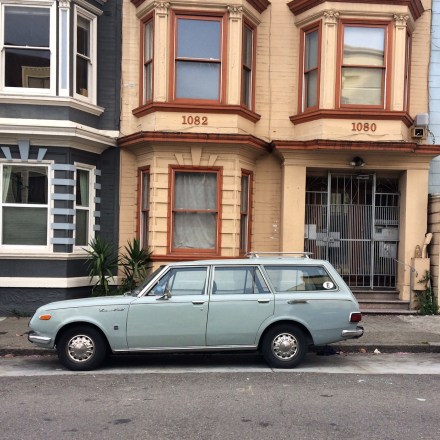 Out of the Japanese brands that landed in the American Market during the 1950’s and 1960’s, Toyota learned the quickest how to adapt to the foreign to them trends that set the Jones’s hearts alight. One trend realized was the splintering of the American Market, as the generation of Boomers headed to dealerships, they weren’t happy with one-size fits all motoring in escalating finery that had dominated the automotive landscape from The Great Depression through the Fabulous Fifties.
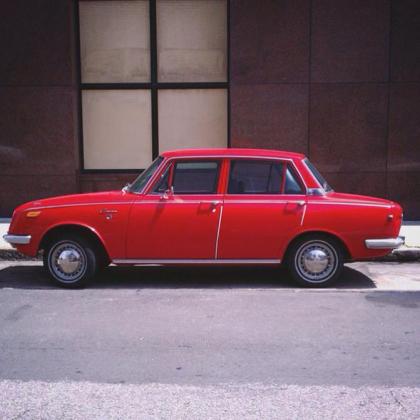 It didn’t take long for Toyota to learn some important basics about success in the American Market. Within 2 generations and one spectacular failure at the end of the 1950’s, Toyota was fast becoming the most important import brand in the United States as the 1960’s gave way to the 1970’s.
 Dynamic Drive