 Chrysler Corporation products of the early 1970’s embraced more fully than any other brand of car the intergalactic possibilities and fantasies of Science Fiction in the earthbound chariots they offered to consumers. Going from rectilinear boxes of the 1960’s, Chrysler flooded every sight line with bulbous curves with their new Fuselage look for everything above the Valiant and Dart.
First filling the largest shadows with the C-Body full sized line, the 1971 re-skin of the intermediate B-bodies took on a futuristic shape that in all irony, would soon lose market share to a heap of neo-classical tastes.
 The Ford Thunderbird saw many persona changes to cope with the changing times throughout its life as a personalized chariot for a select few. From luxurious sports personal convertible to overwrought George Barris Custom to fascinatingly land bound ode to space and air travel, to suburban bordello on wheels, where was the Thunderbird by the time it turned sweet 16?
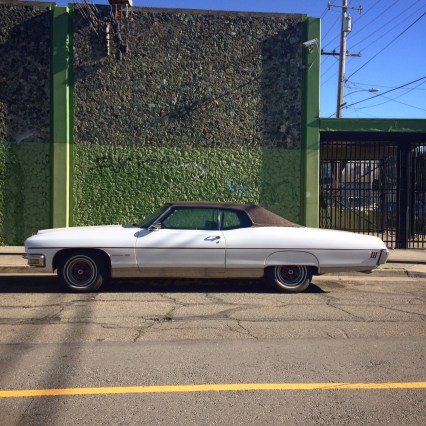 For the full decade of the 1960’s, Pontiac had been on a miraculous winning streak. Hitting a stride walking into the decade, they found themselves the perpetual #3 brand, ousting long time 3rd favorite brand, Plymouth, from their customary slot with a blend of prestige, panache and performance.
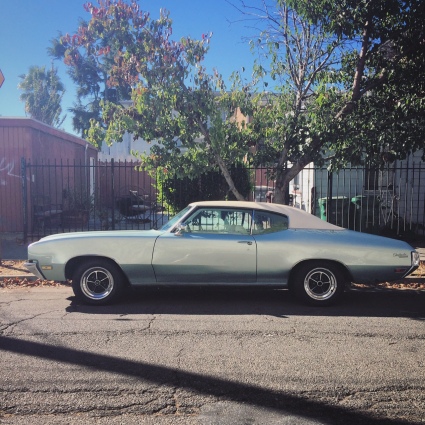 Buick has counted on you really rather having its wares throughout its history. The turn of the decade from 1969 to 1970 was no different, as more commonality crept in between all of General Motors intermediate cars.
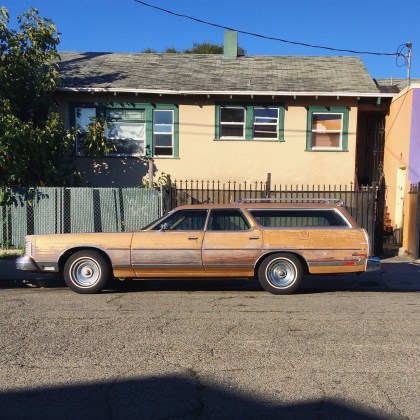 Once upon a time in a world 40 years ago, the way to haul the herds through freshly minted suburbia wasn’t via sport utility vehicles, nor minivans. The new fangled concept of all things in one crossovers would have bewildered the average buyer in 1976. Only one thing got-er-done in Bi-Centennial ’76, and that was the wooly mammoth clad in wood known as the full sized Station Wagon.
 It’s often that we discount Volvo as the sporting Swedish car, and give all of the glory of athletics to Saab. Where Saab tried again and again with variations of the Sonett from the 1950’s through the early 70’s, Volvo stayed pretty tried and true to their concept of a sports tourer. After the attempt with a Scandinavian Corvette, the P1900, the graceful P1800 debuted in 1961.
 General Motors’s status as the majority producer of Automobiles for much of the 20th Century meant it could waste time where other car manufacturers couldn’t. This meant that GM fielded no less than 3 automatic transmissions for shiftless driving throughout its 5 brands into the 1960’s. This also meant, as Air Conditioning became commonplace, and fun in the sun motoring became a thing of the past, GM fielded convertibles, full sized convertibles to boot, in all 5 brands way into the Disco Ball and Opera Window’d 1970’s.
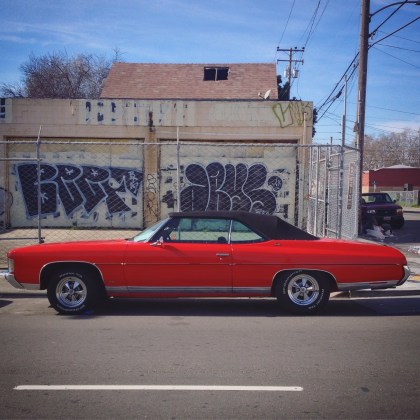 The sporting pretense of the Full Sized Chevrolet had been on the wane for more than half a decade. Nevertheless, with market dominance unlike any other manufacturer, General Motors still saw it worthy to offer top down motoring to the masses in massive sizes when it re-designed its Full Sized Automobiles for the 1971 model year.
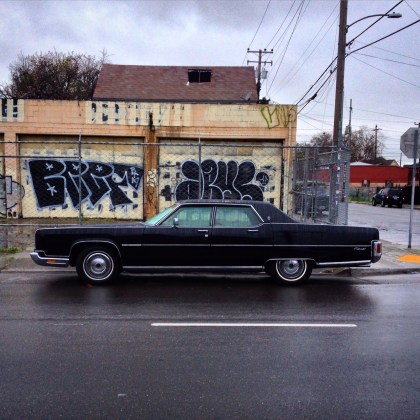 Much can be said for the foreboding presence that many a vintage domestic luxury sedan exudes. With forty-plus years of changing automotive trends, a premium offering like a 1973 Lincoln Continental perhaps tells even more of a story compared to when they were new.
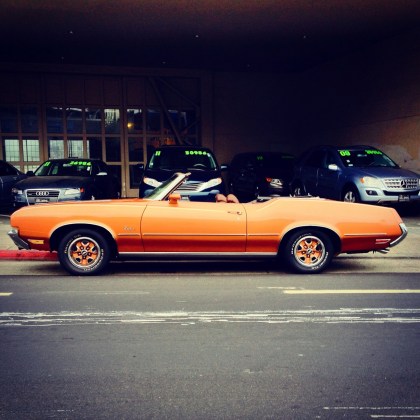 The call to let the sunshine in and dawn the Age of Aquarius was a decade turning herald call. However, the sun was about to set on the American Convertible as the 1970’s plowed on. In the personalization and self-actualization days of the early 1970s, the coddling comforts of Air Conditioning, tinted glass and vinyl roofs conferred more savvy than free in-the-breeze sporty, top down motoring. Sunroofs and too many sunburns lead people away from top down motoring in the way it had been embraced in the past.
 Dynamic Drive