 General Motors’s status as the majority producer of Automobiles for much of the 20th Century meant it could waste time where other car manufacturers couldn’t. This meant that GM fielded no less than 3 automatic transmissions for shiftless driving throughout its 5 brands into the 1960’s. This also meant, as Air Conditioning became commonplace, and fun in the sun motoring became a thing of the past, GM fielded convertibles, full sized convertibles to boot, in all 5 brands way into the Disco Ball and Opera Window’d 1970’s.
Right in the middle of the pack, in the middle of the model generation, we have the Oldsmobile Delta 88. What’d you get over the other offerings at Chevy, Pontiac, Buick and Cadillac? Who bought these beautiful beasts?
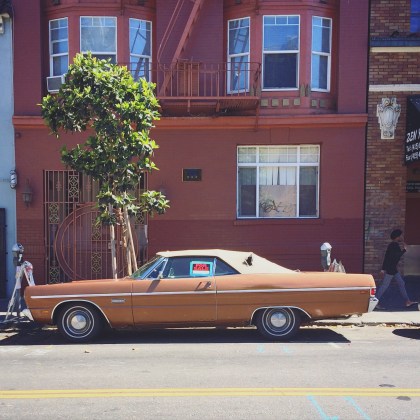 Despite efforts to be a constant trendsetter, Plymouth proved itself to be an also-ran brand in the 1960’s. Always in the shadows of market competitors Chevrolet and Ford, Plymouth also had to fend for territory from not too costly sibling brand Dodge. Seemingly, whatever Plymouth had, Dodge wanted too. Without the customer base of Chevrolet, or the marketplace freedom of Ford, Plymouth was oft-left to itself to provide a narrow bandwith of consumer desires.
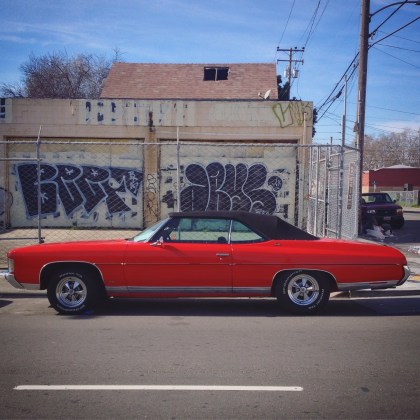 The sporting pretense of the Full Sized Chevrolet had been on the wane for more than half a decade. Nevertheless, with market dominance unlike any other manufacturer, General Motors still saw it worthy to offer top down motoring to the masses in massive sizes when it re-designed its Full Sized Automobiles for the 1971 model year.
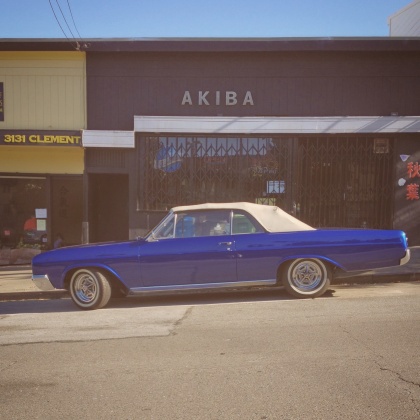 As we head into Convertible season, we look back 50+ years to the peak of the Convertible Market. All American brands minus soon to exit the sales field Studebaker offered convertibles. From petite to ponderous, the choices abounded for budgets stuck in the basement all the way to Bergdorfs.
 As the 2nd half of the 1960’s got underway, Cadillac found itself not doing much wrong. The most premium General Motors offering had long banished American luxury rivals to the lower rungs of the sales charts, if not into the grave. However, this swagger combined with swelling size would eventually be the sword The Standard of The World would nearly mortally wound itself on.
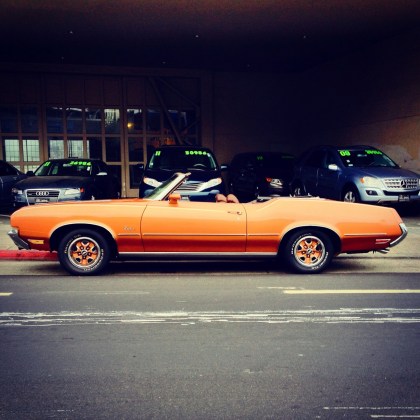 The call to let the sunshine in and dawn the Age of Aquarius was a decade turning herald call. However, the sun was about to set on the American Convertible as the 1970’s plowed on. In the personalization and self-actualization days of the early 1970s, the coddling comforts of Air Conditioning, tinted glass and vinyl roofs conferred more savvy than free in-the-breeze sporty, top down motoring. Sunroofs and too many sunburns lead people away from top down motoring in the way it had been embraced in the past.
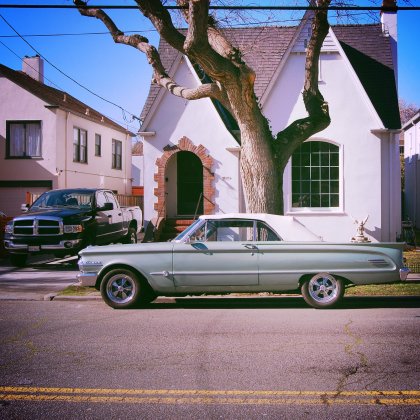 Fuller and Fancier than the Falcon, the Comet had carved out a pretty succesful niche as being a borderline Mid-sized entry level medium priced car in the early 196o’s. As the Falcon added to its repetoire, so did the Comet. For 1963 that mean a few more shots across the sky in hardtop coupe and covertible form. Not only was the fun in the way to accesorize your roofs, some new, some would say needed, zoom was available under the hood as well.
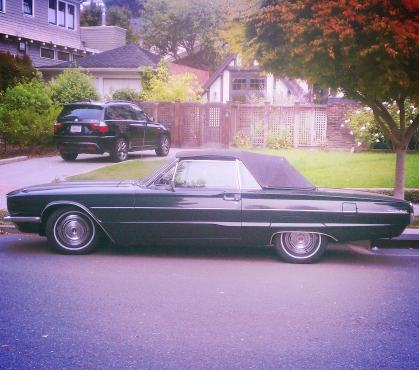 The Thunderbird legacy started as a top down thrill. However, the thrill was a bit muted in some ways. To give the original Thunderbird a leg up over a host of sports cars, the Thunderbird was marketed as a “personal” car. As such, comfort and convenience was built in from the beginning.
 General Motors’s efforts at providing reduced sized motoring during the early 60’s delivered an engineering 1-2-3 punch. For 1960, ’61 and ’62, three different compact models from America’s premiere manufacturer took home the coveted Motor Trend Car of The Year award.
 Dynamic Drive