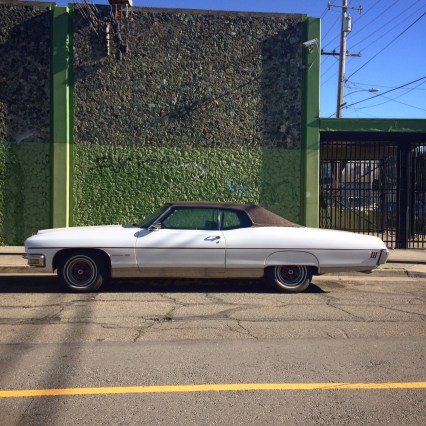
 For the full decade of the 1960’s, Pontiac had been on a miraculous winning streak. Hitting a stride walking into the decade, they found themselves the perpetual #3 brand, ousting long time 3rd favorite brand, Plymouth, from their customary slot with a blend of prestige, panache and performance.
The performance anxiety started to settle in during the late 60’s with pressures coming in all directions, as the stewarts of Pontiac’s swing to the near top of the industry left for better pastures or bigger paychecks. Where did that leave the Pontiac Bonneville in its 14th season as a perennial favorite chariot of the near-luxury field?
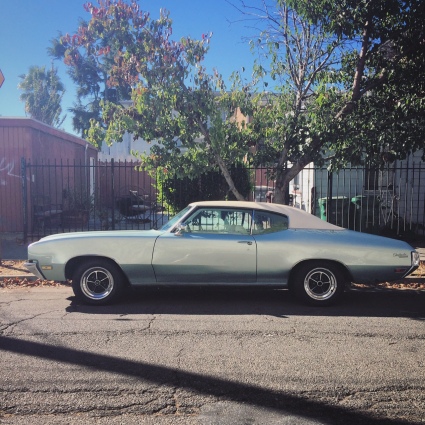 Buick has counted on you really rather having its wares throughout its history. The turn of the decade from 1969 to 1970 was no different, as more commonality crept in between all of General Motors intermediate cars.
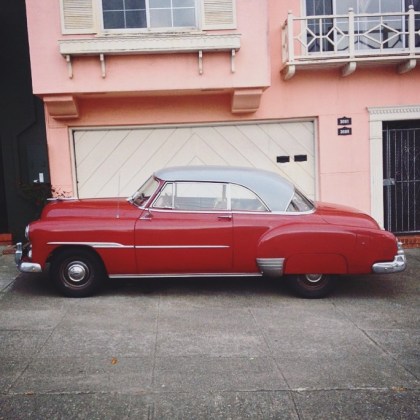 Although Chevrolet always languished at the bottom of the traditional General Motors hierarchy, often it portrayed itself as an aspirational Cadillac for the everyperson. While Ford’s most often left it to middle child Mercury to dress up in Mama Bear Lincoln Luxury guise, Chevrolet quite often did drag in the duds more associated with the higher echelons of the country’s biggest manufacturer.
 By 1964, General Motors premium efforts offered up a magic brew of marketing and moxie. Where Ford and Chrysler could only work their mojo into offering perhaps only 2 or 3 premium sedans, General Motors had a slew of them. Most credit Ford with starting the brougham brigade, in actuality Pontiac brought the bourgeois to more of the masses with their Bonneville Brougham.
 Chevrolet may have dominated quite regularly when it came to sales for the majority of the immediate post war. One area the Chevrolet perpetually found themselves behind however, was in Wagon sales. Between advances and ability to exploit snob appeal, real wood or not, Ford sold more Ranch Wagons, Country Sedans and Squires to Chevrolets offerings quite regularly.
 General Motors’s status as the majority producer of Automobiles for much of the 20th Century meant it could waste time where other car manufacturers couldn’t. This meant that GM fielded no less than 3 automatic transmissions for shiftless driving throughout its 5 brands into the 1960’s. This also meant, as Air Conditioning became commonplace, and fun in the sun motoring became a thing of the past, GM fielded convertibles, full sized convertibles to boot, in all 5 brands way into the Disco Ball and Opera Window’d 1970’s.
 One must remember the scope and power of General Motors in the early 1960’s. When the Corvair didn’t conquer all, becoming the #2 sales holder among all domestic compact cars, Chevrolet and General Motors were not satisfied enough with quarter million rear-engined wonders that buyers chose.
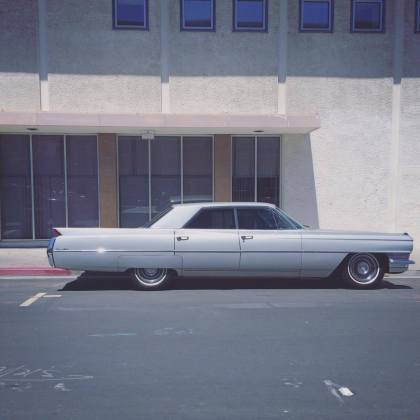 Finned and Fancy, Cadillac seemingly could do little wrong in the early 1960’s. Recognizing continuity as a cash cow and cementing a legacy, Cadillac style and substance found itself setting in stone a luxury legacy that still stands 50 years later.
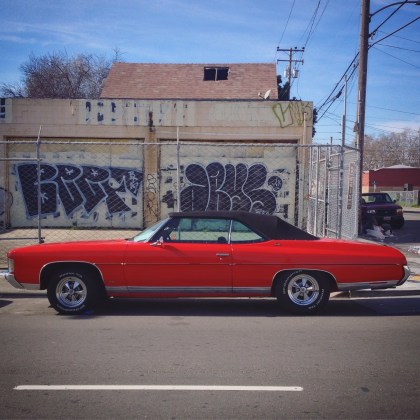 The sporting pretense of the Full Sized Chevrolet had been on the wane for more than half a decade. Nevertheless, with market dominance unlike any other manufacturer, General Motors still saw it worthy to offer top down motoring to the masses in massive sizes when it re-designed its Full Sized Automobiles for the 1971 model year.
 Rockets start to fall back to the earth after they pierce their way into outer space. That’s pretty much the legacy of Oldsmobile during the second half of the 50’s. As the Overhead Valve V8 performance revolution Oldsmobile inspired in 1949 spread to all popular priced cars in the middle of the decade, the laurel brand of Lansing found itself in a dilemma.
 Dynamic Drive