 What if I proposed to you that the Oldsmobile Cutlass Ciera was the most polarizing car of the last 40 years? I’m sure you’d point out there’s plenty of other cars that deserve a bigger medal in terms of era defining cars but I have some key arguments.
Some will say that it was the car that planted the seeds of death for the Oldsmobile brand. Others will tout their ability to abuse the basic sound design of them (of course, once those pesky GM bugs got worked out of the earliest editions) for more than 2 decades and multiple hundreds of thousands of miles worth of trips that could loop the globe. The true meaning of it, as a symbol, lies somewhere down the middle of course, and I try to rectify that while looking at this indeterminable of model year well-equipped Cruiser Wagon version.
 In a number of ways Toyota was the most “American” of Japanese manufacturers. Once on their feet in the U.S. market in the early 70’s, they fielded a line up not dissimilar, albeit smaller and far more efficient, than Detroit rivals.
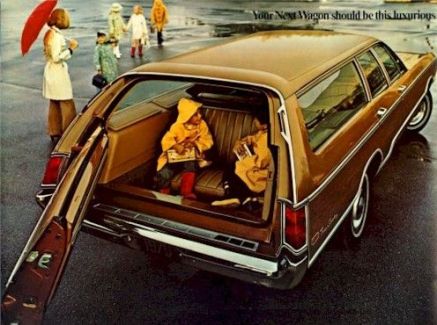 We’ve seen our nation wide open on the highways this summer. Now it’s time for us to head back to the realities of gaining more knowledge. It’s back to school season, and every big box parking lot is filled with the spoils of breeding the next generation of thinkers and doers…and spoiled brats and bullies too.
 The Vista Cruiser is an interesting detour in the concept of the family hauler. General Motors always struggled a wee bit with the concept of the station wagon (and the minivan and SUV crazes that followed) compared to Ford and Chrysler.
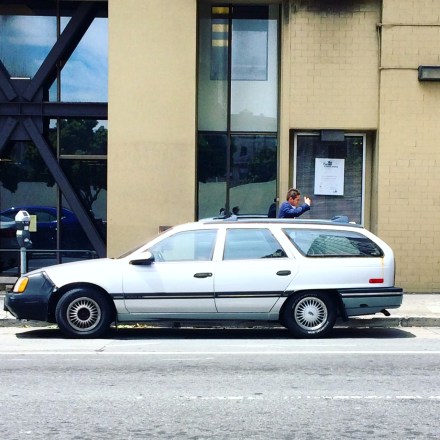 It was a revolution on wheels for the ordinary American Family Sedan. Even more so as a Station Wagon. Therein lies the miracle of the Original Ford Taurus. Long having played catch up to everyone else when it came to mainstream innovation, Ford fancied a future for mainstream buyers GM, Chrysler and a host of competitors couldn’t envision slipping into as tomorrow’s dream today.
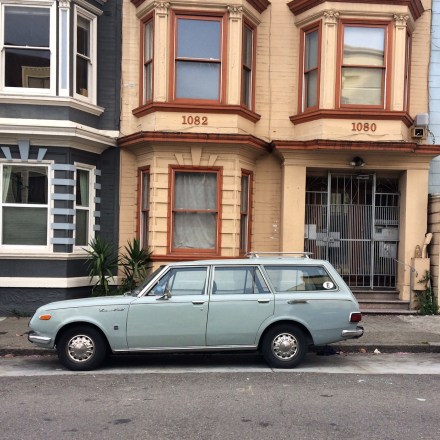 Out of the Japanese brands that landed in the American Market during the 1950’s and 1960’s, Toyota learned the quickest how to adapt to the foreign to them trends that set the Jones’s hearts alight. One trend realized was the splintering of the American Market, as the generation of Boomers headed to dealerships, they weren’t happy with one-size fits all motoring in escalating finery that had dominated the automotive landscape from The Great Depression through the Fabulous Fifties.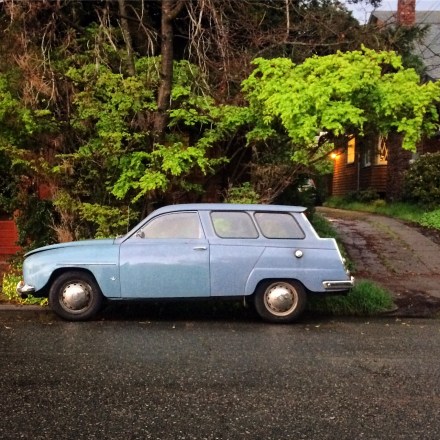
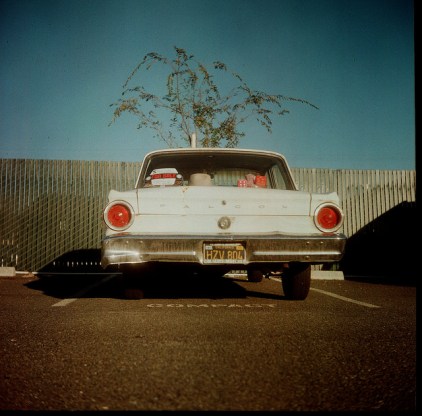 Once upon a time, on a website far far away but not really, when I was 30-ish years old, I declared the Ford Falcon the vintage chariot fancied the most by a certain demographic. Interestingly, at the same time I made such a grandiose generalization about my own respective urban peer group, I took up another anachronistic way of expression;
 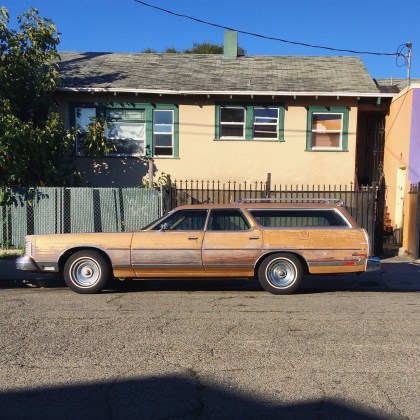 Once upon a time in a world 40 years ago, the way to haul the herds through freshly minted suburbia wasn’t via sport utility vehicles, nor minivans. The new fangled concept of all things in one crossovers would have bewildered the average buyer in 1976. Only one thing got-er-done in Bi-Centennial ’76, and that was the wooly mammoth clad in wood known as the full sized Station Wagon.
 Chevrolet may have dominated quite regularly when it came to sales for the majority of the immediate post war. One area the Chevrolet perpetually found themselves behind however, was in Wagon sales. Between advances and ability to exploit snob appeal, real wood or not, Ford sold more Ranch Wagons, Country Sedans and Squires to Chevrolets offerings quite regularly.
 Dynamic Drive