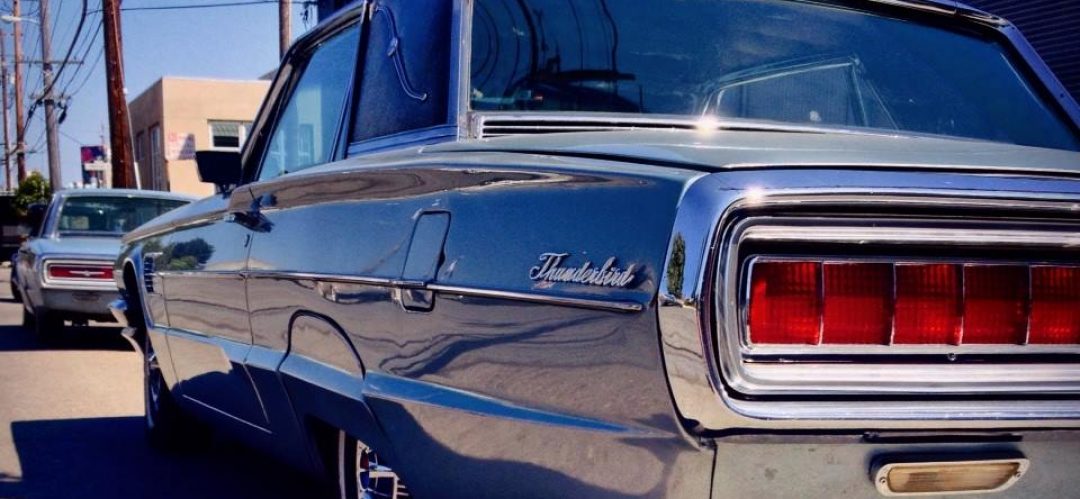
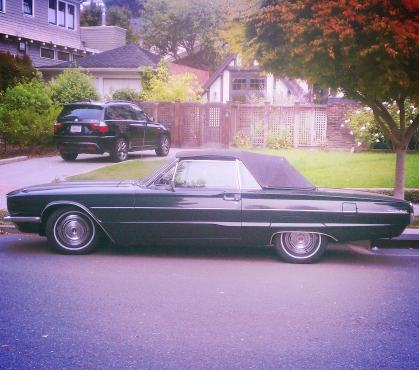
 The Thunderbird legacy started as a top down thrill. However, the thrill was a bit muted in some ways. To give the original Thunderbird a leg up over a host of sports cars, the Thunderbird was marketed as a “personal” car. As such, comfort and convenience was built in from the beginning.
Featuring an optional Hardtop, and a slew of convienience options, the open air quotient always seemed to be an optional one. Ford flirted and fielded the idea of closing off the full free-breeze feeling as early as 1960 with an option of a sliding metal sunroof for Hardtop Coupes. But by 1966, the writing was on the wall within the confines of the Private World of Thunderbird.
Continue reading “(Found In) Claremont (Oakland, California): 1966 Ford Thunderbird Convertible”
 Once Buick engineered their Nailhead V8, they weren’t happy with letting their competitors in-house and beyond have the performance crown. Buicks were once known as Banker’s Hot Rods. Returning for 1954 was the quicksilver Century, ready to snatch trophies from in house cousin the Oldsmobile 88, among others.
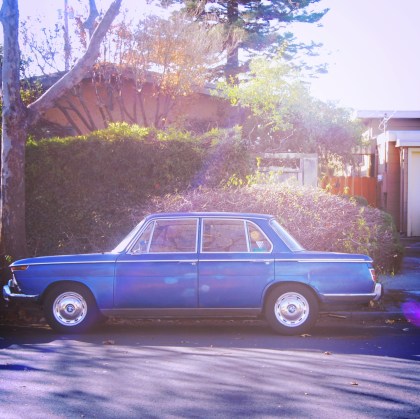 Although the 2002 gets the majority of credit for BMW’s North American success, the models that laid the ground work for sports sedan dominance for half a century laid in the Neue Klasse sedans and related coupes released in 1962. From humble beginnings as an alternate for the growing German Post-War Middle Class, the 1500, 1800 and 2000 series sedans defined dynamic motoring the world over.
 The increased emphasis of accessible luxury made the Caprice the new King of the Chevrolet castle in a short number of buyer seasons. Although the Impala still held the sway over many new car buyers as the default choice for motoring finery, more and more people elevated their purchases to the most princely of Chevies as the 1960’s wound down.
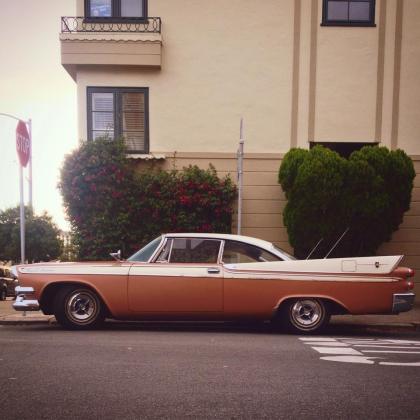 The fabulous fin-tailed Forward Look rocked the industry in 1957. Beyond the styling and the engineering, Mopar’s mainstream brands all fielded muscle coupes and convertibles as halo highway eaters. The most demonic Dodge was the least known, however.
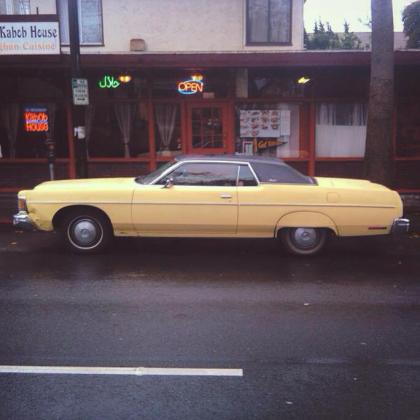 The epitome of leviathan bulk during the excessive “Me” decade of the 1970’s can be exemplified by the bulk of full-sized offerings from all Detroit Brands. You can’t point a finger at any American Manufacturer without blaming the other for producing some of the most blatantly wasteful automobiles of all time, decidedly at the wrong time when it comes to market conditions.
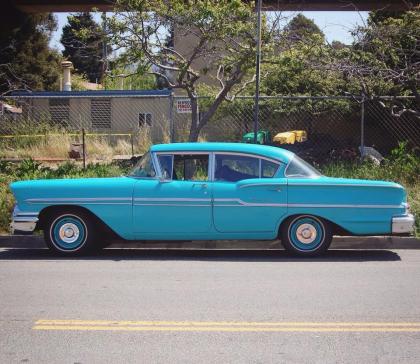 Although recognized as an icon today, the 1957 line of Chevrolet standard sized cars got left in the popularity and newness dust by both rivals Ford and Plymouth. The remarkably upright and befinned Bel-Airs and below saw themselves trying to peddle modest virtues and technological updates compared to time-traveling Plymouths and Fancier Fords.
 If this Dodge Charger was decked out in All-Black, it would cut a far more threatening presence on the streets of San Francisco. As it stands, resplendent in a shade close to gold, it remains one of the most celebrated muscle machines of the late 1960’s.
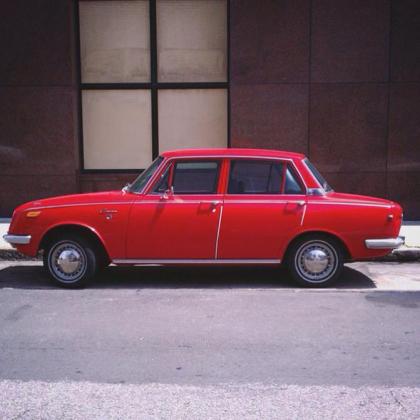 It didn’t take long for Toyota to learn some important basics about success in the American Market. Within 2 generations and one spectacular failure at the end of the 1950’s, Toyota was fast becoming the most important import brand in the United States as the 1960’s gave way to the 1970’s.
 Studebaker, independent manufacturer always willing to take a risk, was no stranger to creating stylish coupe models during the post war era. Had it not been for the advanced styling that Studebaker took in the personalization of the average automobile, many mainstream manufacturers may have not taken heed and offered their own wares.
 Dynamic Drive