 There’s a price to pay for being independent. Possibly no manufacturer continually learned that lesson better/worse than Studebaker. With big ambitions yet more often than not modest budgets, the sensations of South Bend often shot for the stars but found little oxygen to continue their journeys beyond the stratosphere.
Where larger manufacturers could find cash to carry them into modest restyles and updates, smaller brands had to stick to guns they fired. This is where the story of the “first by far with a Postwar Car” 1947 Studebaker found itself 6 seasons later in 1952.
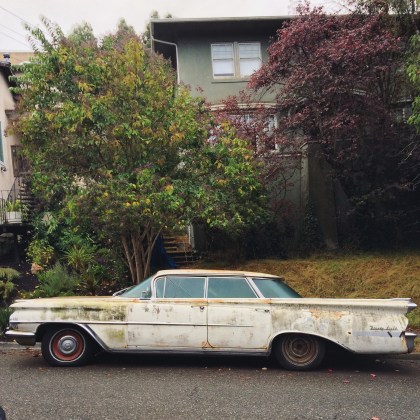 Although the tidal change that the 1959 General Motors Full Sized line was, perhaps no marque needed that change more than Oldsmobile. The brand had gone from offering the most conservative offerings in 1957 to the most derided offerings for 1958.
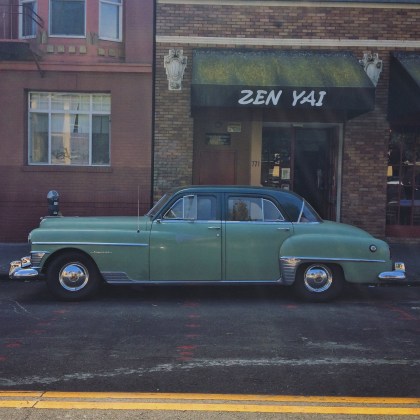 We’ve spoken earlier about the Imperial Image problem. From the introduction of the brand in 1926 through 1954, it was positioned as the most premium Chrysler. That problematic push towards the glass ceiling of luxury brands always saddled Imperials with the upper middle class respectability of the Chrysler brand. The challenge, alongside sharing a heavy commonality with Chrysler cars, was being accepted as a legit full luxury competitor to Cadillac, Lincoln and Packard.
 Chevrolet may have dominated quite regularly when it came to sales for the majority of the immediate post war. One area the Chevrolet perpetually found themselves behind however, was in Wagon sales. Between advances and ability to exploit snob appeal, real wood or not, Ford sold more Ranch Wagons, Country Sedans and Squires to Chevrolets offerings quite regularly.
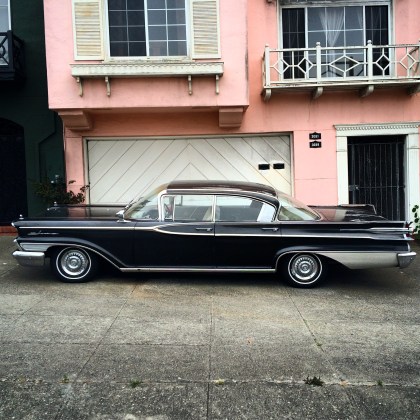 We’ve
We’ve 
 Rockets start to fall back to the earth after they pierce their way into outer space. That’s pretty much the legacy of Oldsmobile during the second half of the 50’s. As the Overhead Valve V8 performance revolution Oldsmobile inspired in 1949 spread to all popular priced cars in the middle of the decade, the laurel brand of Lansing found itself in a dilemma.
 The superstitions around “Mercury Retrograde” are perceived as explanations for communication and travel gone awry. Maybe that was the first mistake Ford made; naming their middle brand Mercury in the first place. For every two steps forward the brand made, it seemingly made two steps back.
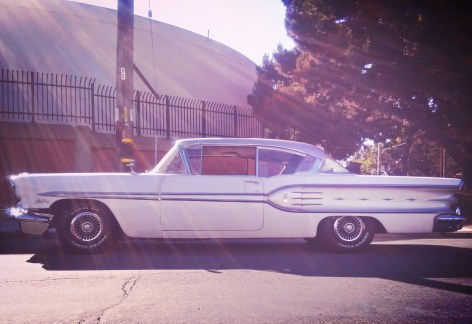 Today we feature a little Black Lives Matters automotive history alongside the trajectory of the Pontiac Motor Division in the late 1950’s. Our subject car has a story too precious to pass up in terms of our collective history. It follows the intersection of race, class, consumerism and pride all wrapped up in chrome dreams from Baghdad By The Bay.
  Dynamic Drive