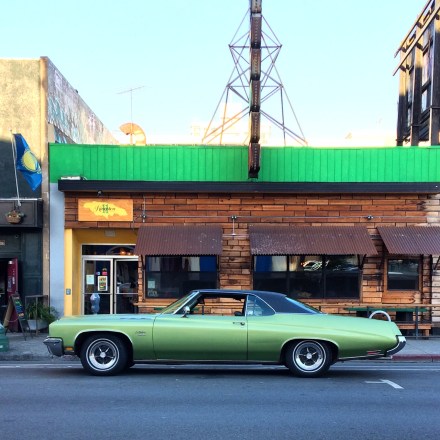
 When did Buick become a car for the elderly? It’s really hard to say. For most of the early post-war era, Buick more or less espoused the belief in more subtle, less ostentatious luxury, in comparison to GM cousin brand Cadillac. During that same period, there were extensions downward to price categories just above Chevrolet, and attempts at re-cementing their reputation as Banker’s Hot Rods as well.
Another belief was offering a whole lotta car for a minimum of a premium. As the Special nameplate drifted out of sight to re-appear as a luxury compact in the fall of 1960, the least dear Buick for your pocketbook became the LeSabre. Perhaps being a perennial customer favorite with people starting in 1959 lead to something of a reputation.
Continue reading “(Found In) Northgate (Oakland, California): 1972 Buick LeSabre Hardtop Coupe”
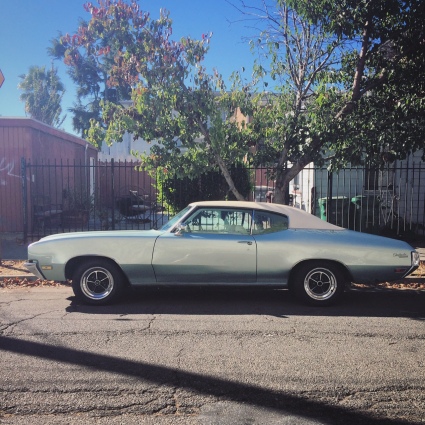 Buick has counted on you really rather having its wares throughout its history. The turn of the decade from 1969 to 1970 was no different, as more commonality crept in between all of General Motors intermediate cars.
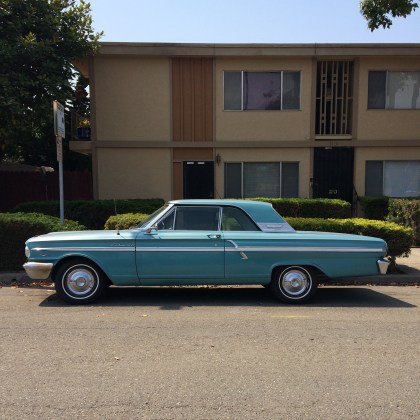 It’s not easy peaking the first time on stage. It happens with music acts, television shows, and quite often, cars. The combination of right place, right time and blessings from the stars (and economic conditions) bodes well for certain product successes. Here lies the story of the re-branded, midsized Ford Fairlane. For one shining moment, without market factors against it, it claimed a genre all unto it’s own.
 In the middle Sixties fires shot among brands, the Pontiac GTO probably ranks a close second to one of the most potent bullets of the decade. Like the Ford Mustang, it satisfied a thirst for wild abandon behind smaller, sportier, more powerful machines from Detroit’s big three. The GTO maximized profits even further than the Mustang since it shared its humble body with other mid-sized Pontiacs, which, in reality, meant it shared quite a bit with offerings from Chevrolet, Oldsmobile and Buick as well.
 The superstitions around “Mercury Retrograde” are perceived as explanations for communication and travel gone awry. Maybe that was the first mistake Ford made; naming their middle brand Mercury in the first place. For every two steps forward the brand made, it seemingly made two steps back.
 Once Buick engineered their Nailhead V8, they weren’t happy with letting their competitors in-house and beyond have the performance crown. Buicks were once known as Banker’s Hot Rods. Returning for 1954 was the quicksilver Century, ready to snatch trophies from in house cousin the Oldsmobile 88, among others.
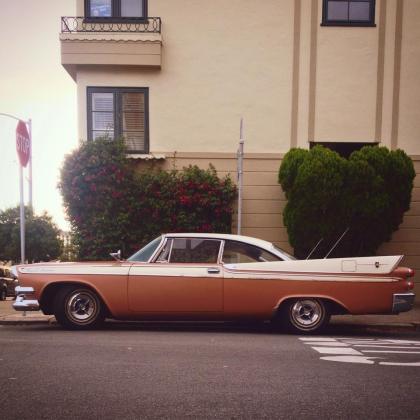 The fabulous fin-tailed Forward Look rocked the industry in 1957. Beyond the styling and the engineering, Mopar’s mainstream brands all fielded muscle coupes and convertibles as halo highway eaters. The most demonic Dodge was the least known, however.
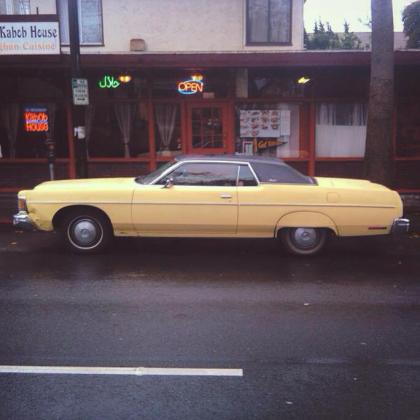 The epitome of leviathan bulk during the excessive “Me” decade of the 1970’s can be exemplified by the bulk of full-sized offerings from all Detroit Brands. You can’t point a finger at any American Manufacturer without blaming the other for producing some of the most blatantly wasteful automobiles of all time, decidedly at the wrong time when it comes to market conditions.
 If this Dodge Charger was decked out in All-Black, it would cut a far more threatening presence on the streets of San Francisco. As it stands, resplendent in a shade close to gold, it remains one of the most celebrated muscle machines of the late 1960’s.
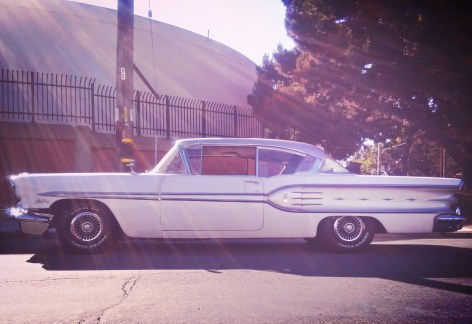 Today we feature a little Black Lives Matters automotive history alongside the trajectory of the Pontiac Motor Division in the late 1950’s. Our subject car has a story too precious to pass up in terms of our collective history. It follows the intersection of race, class, consumerism and pride all wrapped up in chrome dreams from Baghdad By The Bay.
  Dynamic Drive