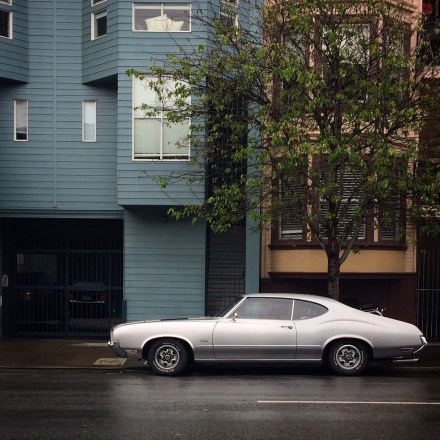
 As Oldsmobile rose to their zenith in the 1970’s, it started to do so by playing musicial chairs with the various marketing images that made for being the toast of the town image that it had fostered since the 1950’s. The Olds-multiplicity of the brand had been a constant mix of practicality, performance and posh since the end of World War II. For the Elegant Ninety Eights there were the Superlative Super 88’s. For the practical F-85 there was the swashbuckling Cutlass. For the sword of intermediates, a crowned princess Supreme started an ascent to the top of the charts like Diana, Mary and Florence starting in 1966.
The “Little Limousine” sparkled the most when it focused on a formal roof’d coupe. Where did that leave it’s athletic, buxom and liberated sister ship the Cutlass S? In a curious place as Oldsmobile never wanted to commit to one specific identity.
 Chrysler Corporation products of the early 1970’s embraced more fully than any other brand of car the intergalactic possibilities and fantasies of Science Fiction in the earthbound chariots they offered to consumers. Going from rectilinear boxes of the 1960’s, Chrysler flooded every sight line with bulbous curves with their new Fuselage look for everything above the Valiant and Dart.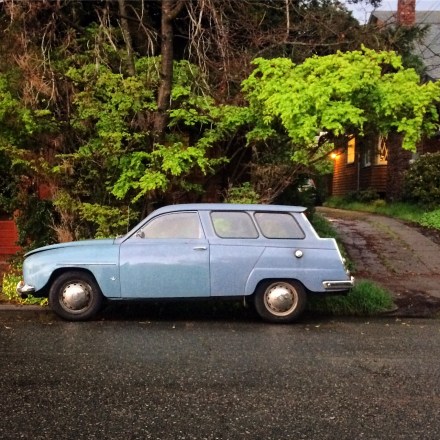
 A wing, a prayer, and perhaps some emergency road flares. That encapsulated where Studebaker was by 1962 with their standard passenger car line. Where the innovation of cropping the circa ’53 standard Studebaker down to the Lark in 1959 was a stroke of genius, by 1962 many manufacturers crowded around the special bird to make a feast. No longer was it the only downsized dowager with the pride of a potent V8 engine.
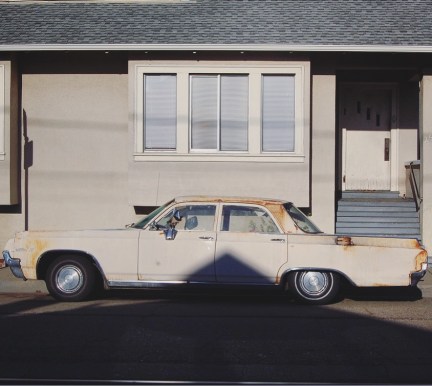 Caste systems find their function in strict boundaries. If there wasn’t exclusive traits to one station in life, the combination of fear and desire wouldn’t keep products in their proper places. As something that humans have created for each other, we oft find these systems in play in the products humans create as well.
 Desperate times call for desperate measures. Fewer post-war manufacturer moments represented Code Red better than the reality of the Studebaker-Packard merger of 1954. In the imperfect marriage between the pearl of South Bend and once the most exclusive brand in the land of The USA saw a monumental undoing rather hastily. The debacles of Studebaker’s quality failings and poor ability to keep up with consumer demand of their 1953 coupes had long lasting implications. Packard’s own quality difficulties sunk their Clipper ships and their larger cruise ships.
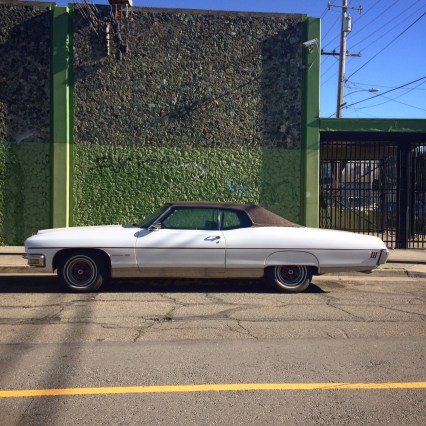 For the full decade of the 1960’s, Pontiac had been on a miraculous winning streak. Hitting a stride walking into the decade, they found themselves the perpetual #3 brand, ousting long time 3rd favorite brand, Plymouth, from their customary slot with a blend of prestige, panache and performance.
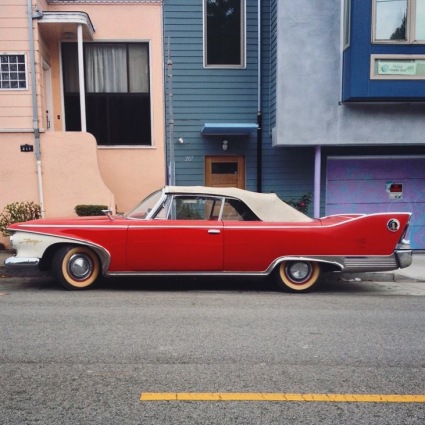 We’ve mused before about the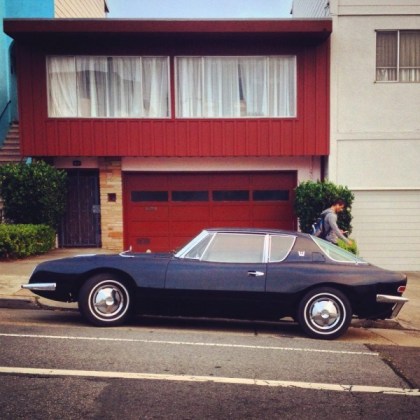
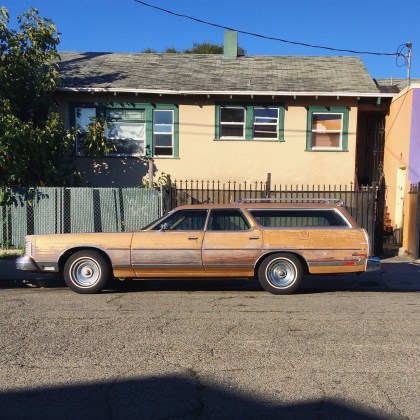 Once upon a time in a world 40 years ago, the way to haul the herds through freshly minted suburbia wasn’t via sport utility vehicles, nor minivans. The new fangled concept of all things in one crossovers would have bewildered the average buyer in 1976. Only one thing got-er-done in Bi-Centennial ’76, and that was the wooly mammoth clad in wood known as the full sized Station Wagon.
 Dynamic Drive