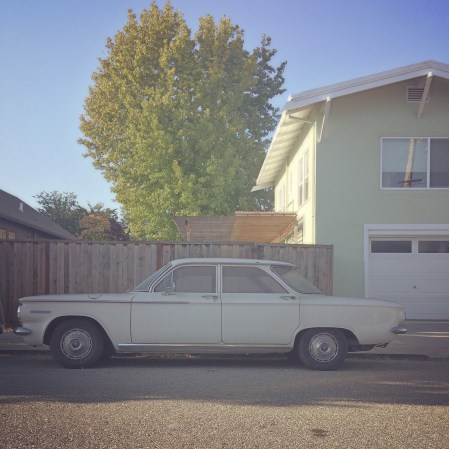
 It’s forgotten quite often that the original plan for the Chevrolet Corvair was to be an economical rival to the proliferation of modest European Sedans that found support on the shores of the United States throughout the 2nd half of the 1950’s. Not only was the Volkswagen Beetle a target. Sedans from Renault, Fiat and Volvo alongside more mundane rivals from the domestic market were part of The Corvair’s world domination plans.
Of course, the vast majority of Americans wanted their basic transportation, well, basic. Where did that leave the Corvair Sedans in the wake of the runaway niche success of the Corvair Coupes and new for ’62 Convertibles?
Continue reading “(Found In) Temescal (Oakland, California): 1962 Chevrolet Corvair 700 Sedan”
 There’s been plenty said and 20/20 hindsighted about the fall of Oldsmobile and the historic brand’s demise in 2004. In reality it was a mixed storm, and an amazing bellwether of where consumer tastes had gone alongside the pursuits of ultimate profits by behemoth corporations.
 A wing, a prayer, and perhaps some emergency road flares. That encapsulated where Studebaker was by 1962 with their standard passenger car line. Where the innovation of cropping the circa ’53 standard Studebaker down to the Lark in 1959 was a stroke of genius, by 1962 many manufacturers crowded around the special bird to make a feast. No longer was it the only downsized dowager with the pride of a potent V8 engine.
 Buick was never really known as the flamboyant choice of cars in the General Motors stable. However, starting in the Mid 1950’s, Buick found its way to being one of the most fashionable plates car buyers dined off of. For the 1954-57 models it seemed more keeping up with the Jonesin’ for wild color and fabric combinations. However, by 1958, the glittery flamboyance jumped the shark, followed by the Batman inspired ’59, and the relatively less marvel superhero themed 1960 version.
 Before the automotive market fully fragmented due to offerings to fit every type of vehicle lifestyle, the vast majority of automotive sales went to the 4 door sedan. Each American brand offered many flavors of door opening convenience through their line ups. Most often, each one was offered in bargain basement, deluxe and sometimes luxury trim by the mid 1960’s.
 In the rigorous world of competitive automotive sales, the full-sized Ford Automobile was oft the 2nd most beloved (and in a few cases in the post-war, the most loved) conveyance for Middle America. Ford, however, took to the diversification of size and style classes of Automobiles with zeal at the beginning of the 1960’s more than any other brand from the Big Three.
 By 1964, General Motors premium efforts offered up a magic brew of marketing and moxie. Where Ford and Chrysler could only work their mojo into offering perhaps only 2 or 3 premium sedans, General Motors had a slew of them. Most credit Ford with starting the brougham brigade, in actuality Pontiac brought the bourgeois to more of the masses with their Bonneville Brougham.
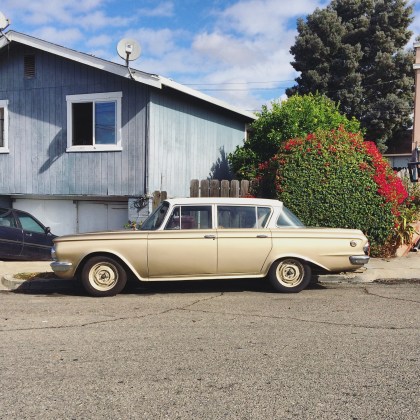 In the era of planned obsolescence, independent brands, out of necessity didn’t “keep up with the times.” Smaller brands like Studebaker, AMC and a number of independent brands before them didn’t have the market share or profits to field new styling and the required sheetmetal every 2 or 3 years, or, in the case of General Motors, the extreme of every model year for 1957, ’58 and ’59.
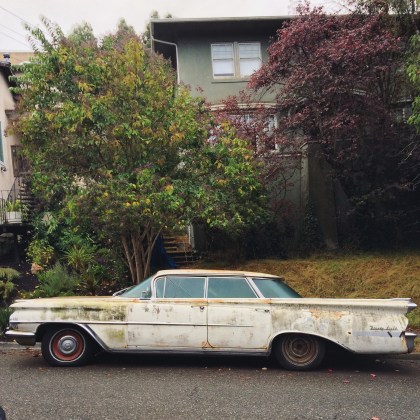 Although the tidal change that the 1959 General Motors Full Sized line was, perhaps no marque needed that change more than Oldsmobile. The brand had gone from offering the most conservative offerings in 1957 to the most derided offerings for 1958.
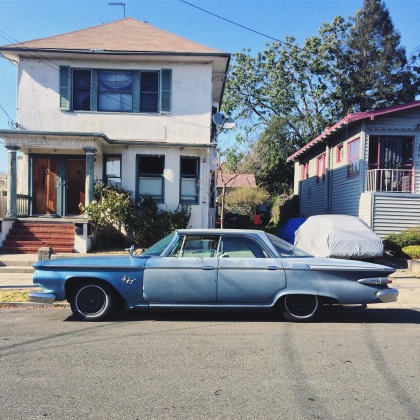 There’s perhaps no bigger surprise underdog that early 1960’s full sized Plymouths. Due to a number of factors, especially from 1960 through 1962, the Big Bargain Basement Mopars found themselves not only at odds with their traditional market segment. They found displeasure among Mopar loyalists as well.
 Dynamic Drive