 By 1964, General Motors premium efforts offered up a magic brew of marketing and moxie. Where Ford and Chrysler could only work their mojo into offering perhaps only 2 or 3 premium sedans, General Motors had a slew of them. Most credit Ford with starting the brougham brigade, in actuality Pontiac brought the bourgeois to more of the masses with their Bonneville Brougham.
Before you cashed in with a Cadillac, there were two steps that you could sit on up the Sloan Ladder. We’ve covered the Electra 225 already, but one favorite on Dynamic Drives is one of our favored subjects from after dark. Today we present yet another Oldsmobile Ninety Eight.
 There’s a price to pay for being independent. Possibly no manufacturer continually learned that lesson better/worse than Studebaker. With big ambitions yet more often than not modest budgets, the sensations of South Bend often shot for the stars but found little oxygen to continue their journeys beyond the stratosphere.
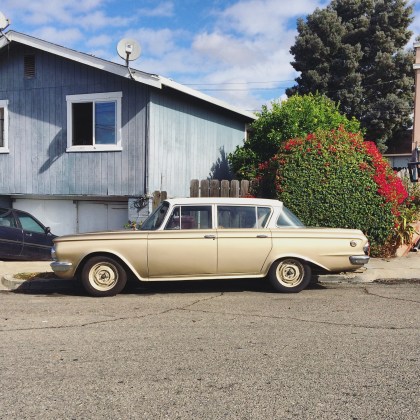 In the era of planned obsolescence, independent brands, out of necessity didn’t “keep up with the times.” Smaller brands like Studebaker, AMC and a number of independent brands before them didn’t have the market share or profits to field new styling and the required sheetmetal every 2 or 3 years, or, in the case of General Motors, the extreme of every model year for 1957, ’58 and ’59.
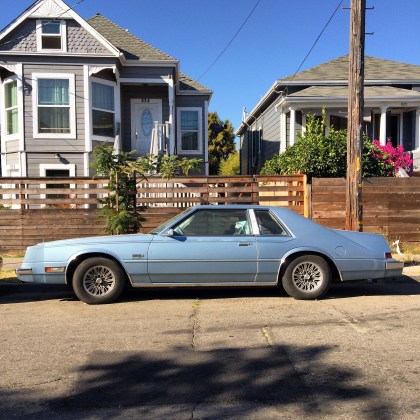 Celebrity endorsements of products weren’t anything new when morning re-dawn’d in ‘Murica in 1981. However, there was heightened trust put in old white dude celebrities where, perhaps, there shouldn’t have been. We had former actor Ronald Reagan as President that year. Reagan beguiled us with tales (perhaps too familiar 35 years into the future) about using traditional, conservative family values to return America. It was bought by the majority of voters still slumbering in a long term malaise that had dominated most of the 1970’s.
 General Motors’s status as the majority producer of Automobiles for much of the 20th Century meant it could waste time where other car manufacturers couldn’t. This meant that GM fielded no less than 3 automatic transmissions for shiftless driving throughout its 5 brands into the 1960’s. This also meant, as Air Conditioning became commonplace, and fun in the sun motoring became a thing of the past, GM fielded convertibles, full sized convertibles to boot, in all 5 brands way into the Disco Ball and Opera Window’d 1970’s.
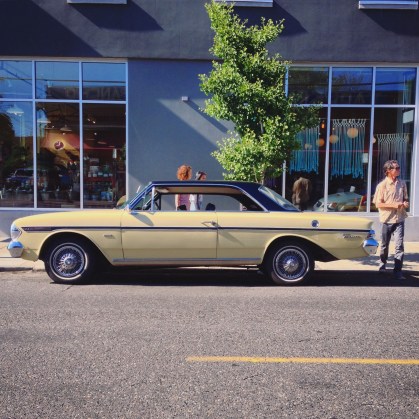 The concept of the “Spring Special” to spur sagging interest in new cars is somewhat a lost concept. In these days of blurred time boundaries, new models up for sale are just given the next model year title. In the past however, new features and running model updates more often than not got a fresh round of marketing to spur along sales of current models.
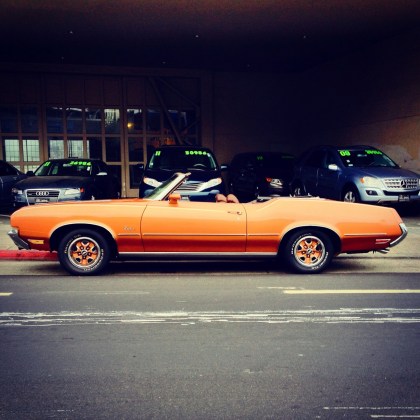 The call to let the sunshine in and dawn the Age of Aquarius was a decade turning herald call. However, the sun was about to set on the American Convertible as the 1970’s plowed on. In the personalization and self-actualization days of the early 1970s, the coddling comforts of Air Conditioning, tinted glass and vinyl roofs conferred more savvy than free in-the-breeze sporty, top down motoring. Sunroofs and too many sunburns lead people away from top down motoring in the way it had been embraced in the past.
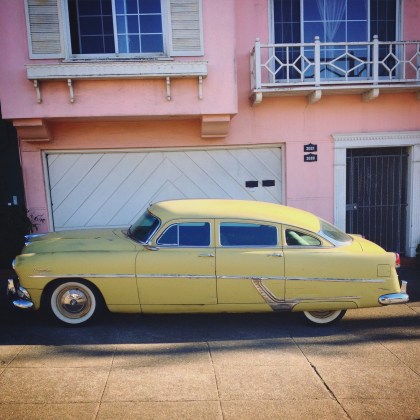 After creating such a sensation on the Automotive market in 1948, The “Step Down” Hudsons found themselves left behind because of their extremely distinctive stance. The envelope Uni-Body that gave the rugged solidarity and premium prestige in the immediate post war proved a limited engineering dead end in the rapidly changing automotive market of the 1950’s.
 Studebaker, independent manufacturer always willing to take a risk, was no stranger to creating stylish coupe models during the post war era. Had it not been for the advanced styling that Studebaker took in the personalization of the average automobile, many mainstream manufacturers may have not taken heed and offered their own wares.
 Dynamic Drive