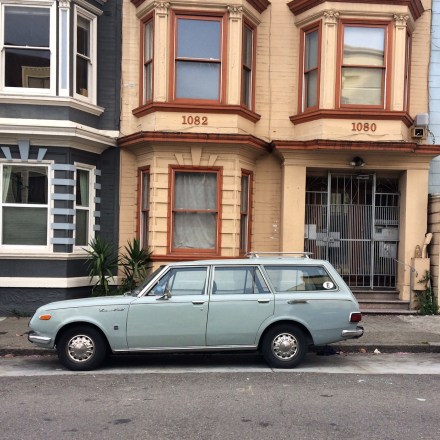
 Out of the Japanese brands that landed in the American Market during the 1950’s and 1960’s, Toyota learned the quickest how to adapt to the foreign to them trends that set the Jones’s hearts alight. One trend realized was the splintering of the American Market, as the generation of Boomers headed to dealerships, they weren’t happy with one-size fits all motoring in escalating finery that had dominated the automotive landscape from The Great Depression through the Fabulous Fifties.
Indeed, after landing a hit with the Corona during the 2nd half of the 1960’s, Toyota went above and below, bringing the baby bear Corolla and the Papa Bear Crown stateside. For those moving immediately out of their Coronas could find themselves in the Mama Bear Corona Mark II.
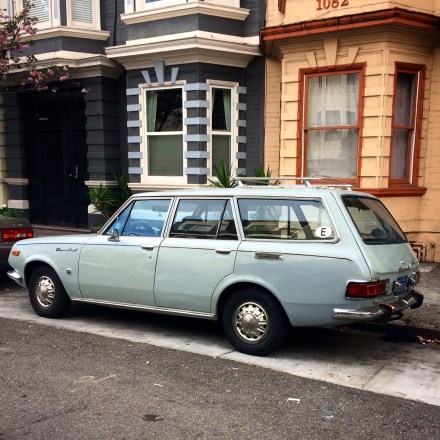
Granted, Toyota’s spread of baby, bigger, bit bigger and biggest wasn’t as shadow casting as, say, Chevrolet with the size variation and expansion between their Vega, Nova, Chevelle and Impala. However the incremental difference nonetheless allowed the classic American feeling of trading up vehicular station as one’s wealth or necessity dictated, in a more manageable package for more appealing to boomers of the “Me” generation enabled by birth control, sexual-women’s-gay-lesbian liberation that wouldn’t need the space for 2.5 or more kids, or the status symbol to drive to the country club or play golf.
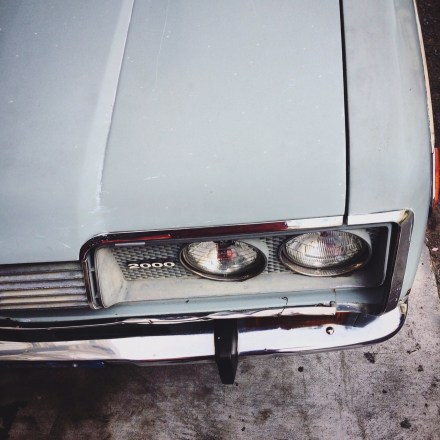
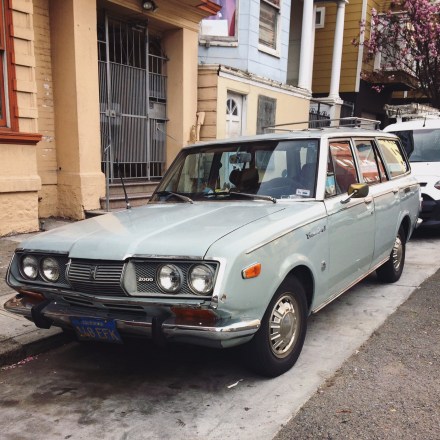 Toyota’s fast escalating reputation for quality, with a design tendency to echo American trends more than European ones made buyers feel more at home. Check the complex grille of this 1972 redesign as Toyota tried to impress the younger Joneses with the good old planned obsolescence familiar to Yankee buyers. In these reputation gaining years small tweaks in design language kept buyers coming back. Of course, as with American cars, both the need for keeping up with the horsepower race and new emissions equipment meant there would be the All-American need to increase displacement as well. The Mark II series featured the sturdy, legendary R-Series engines, punched out to 2.0 Liters in the form of the 18R version and 97 to 105 horsepower depending on emissions equipment market by 1972.
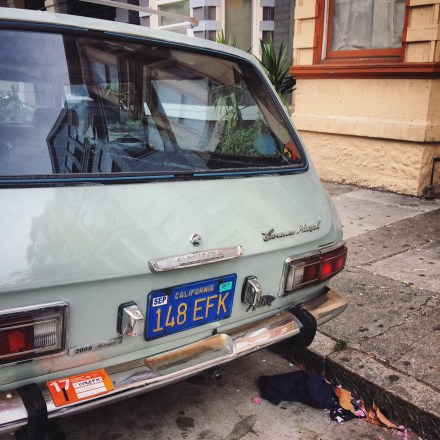
The Mark II Corona also offered an upgrade in Automatics as well, as the Chevy Powerglide related Toyoglide 2 speed automatic lost out to a more flexible 3 speed automatic to keep up with modern highway demands. Where the smaller Corona saw some interstate highway limitations with above legal speed cruising, the Mark II acquitted itself extremely well against base 6 cylinder Novas, Valiants, Hornets and Mavericks as a more potent alternative to the ’67 Corona being traded in. Also, being still rather lightweight and 4 cylinder powered, the efficiency became appealing as well.
 Add in the Mark II offered a flexible compact wagon with 4 doors and a liftgate where the only American options were the cramped and low slung Pinto Squire and Vega Kammback or the close to midsized Hornet Sportback, the Corona Mark II Wagon found itself in that goldilocks sweet spot for a decent number of compact buyers.
The Mark II would eventually provide the market scope that would become the sweet spot that the Toyota Camry came to occupy, even if its direct replacements found themselves bearing the Cressida nameplate. If it weren’t for this little car that checked all the right boxes, Toyota wouldn’t have had a bed to sleep in to dream bigger dreams.
 Dynamic Drive
Wow ~
That looks bone stock and amazingly cherry to boot .
I’m pretty sure this is what my Mother bought new in 1972, I’d already moved away to California by then but I saw it during visits a few times before it got re ended then the tin worms attacked .(New England) .
Please keep posting Station Wagon finds, I love ’em and have had quite a few over the decades .
Yesterday I was looking at a 100 % stock and original 1955 Chevrolet four door wagon with 235 InLine six cylinder engine and two speed Powerglide slushbox tranny ~ coral with a white roof . I’m trying to find out if I can buy and resurrect it or they’ll let it rust away in a field forever .
-Nate
LikeLike
If you have the time and energy, I’d say go for it. At least with the Shoebox Chevy you can expect some return on investment depending on how deep you go, and the wagon has a bit more value than investing that in the 4 door sedans. Lemme know what you end up deciding, Nate!
LikeLike
FWIW ;
The ’55 is the most Conservative of the ‘Tri Five’ Chevies and has always been my favorite .
I’ve never managed to actually own one and this bone stocker would be a cherished dream for me, I doubt I’d restore it but I’d keep it stock apart from modern tires and of course Bilstein HD gas shocks and urethane suspension bushings through out .
For now it’s all a dream, I dunno if they’ll part with it nor if I could afford it .
I tried to get SWMBO to allow me to buy her a ’59 Rambler ‘Cross Country Wagon, seven passenger, fully optioned with OHV InLine six engine, _overdrive_ (!sweet!) , factory tri tone coral and white paint with the uber rare “western” interior…. she said “! NIX NIX ! ” and so got a European Spec. Mercedes Benz fully optioned seven passenger wagon she loves .
if I can swing it, the ’55 Chevy wagon would be just for me to play with and enjoy, drive the living hell out of .
If it happens I’ll try to let you make an article about it beginning with it sitting in a field on four flat tires…
Let me know if you can put in my avatar, I tried creating an account but they want WAYYYYY too much info and involvement ~ I don’t want a blog thing .
-Nate
LikeLike
? How do I add an avatar photo ? .
-Nate
LikeLike
Good question? I think if you’re logged into a wordpress account I think you can upload one. I’ll have to research further and let you know.
LikeLike
My parents bought one of these new in 1972. It had the larger 2000 cc engine, which was apparently only offered in the 1972 model year. The 1971 model looked the same, but had the 1900 cc engine. Apparently the 1972 models like this one were only offered for half a year before being replaced with a new body style mid year. It was an unusual purchase at the time because very few people outside of California were buying Japanese cars prior to the energy crisis. People we knew asked us what kind of car it was. They had never heard of a Toyota. The reason for the purchase was because my mother did not like big station wagons, and there was nothing small enough the Big 3 were offering at the time that was appropriate. There were the Pinto and Vega wagons, but those were 2 door wagons. A 4 door wagon is more useful when you have children. The only other option would have been an AMC Hornet Sportabout. I’m not sure why they didn’t get one of these, but I believe my parents didn’t particularly like AMC products. My folks liked the utility of the small Toyota station wagon. The tailgate flipped up rather than opening like a door or flipping down like on a Ford LTD. This meant you could get up close to the bumper to put things inside the back. You could fold the back seat down, so it was good for carrying kids’ stuff as well as moving things like lawnmowers and gardening supplies. It also wound up being fortunate that they purchased this car once the energy crisis hit a year and a half later. I don’t know what kind of gas milege it got, but it was a 4 cylinder, and it was better than the 10 mpgs a lot of full sized Big 3 wagons were getting. What wasn’t great was the car did not ride very well. The ride was rather choppy. My mother referred to it as “the feel of the road”. When it broke down, we had problems finding mechanics who could fix it. There weren’t many Toyota dealerships around, so you had to travel far to find one. Local mechanics wouldn’t or couldn’t work on Japanese cars because they were unfamiliar with them, and also because they had metric parts, while the mechanics had standard tools used for working on American cars. It wasn’t bad, but it was not this model of reliability either that Japanese cars eventually became known for. What ultimately did the car in was rust. Japanese cars were known for rusting away in the 70s and early 80s. This is why there are virtually none of them around anymore. On ours, the fenders rusted after a few years and needed to be repaired and repainted. Eventually the entire car was rusting all over, and there were problems with the carburetor that couldn’t be fixed because the parts were not longer available, so it was time to let it go. It did go over 100,000 miles, which was considered the norm at the time. Overall I would say the car was OK. I liked certain things about it. The styling was decent. I really liked the wheel covers and the vent windows. The front seats were buckets with a center console, which was different than the front bench seat most wagons had at the time. Interesting to see another one. I haven’t seen one in person in over 30 years.
LikeLike